
Tapio RQP Live · Handheld Roll Hardness Profiler
Roll hardness profiles for paper, board, film and foil rolls - For production, winding, converting and quality teams. Measure across the roll, see the hardness variation immediately and compare it with your own acceptance limits. The profiles sync to the free Tapio RollView PC software.
Full Description
What RQP Live is used for
Soft edges, loose streaks and uneven winding tension turn into wrinkles, web breaks and complaints when a roll is unwound, printed or converted, and none of them shows on the surface. Knocking with a stick, or taking readings at a few points, samples only part of the width. RQP Live records hardness continuously across the roll and calculates its statistics. Rolls can be judged and compared on numbers.
| Paper and board mills | Film and foil producers | Converters and printers |
| Production and quality teams check customer rolls and parent reels at the winder or rewinder, document roll acceptance and compare rolls, shifts and winder positions. | Film, foil and laminate producers look for tension and gauge-related variation that a roll's surface does not show, before the roll goes to the customer. | Converters check incoming rolls, and investigate winding and unwinding problems with profiles they can share with their supplier. |
What it finds
Roll hardness reflects how tightly the material is wound, and with it the tension, thickness and density variation built into the roll. In general, the roll hardness profile is a great quality indicator of the roll. A uniform roll gives a flat profile.
| Soft and loose edges | Streaks and narrow soft zones | Tension and thickness variation | Bagginess and wrinkles |
| Edges and edge rolls are often softer than the middle. The profile shows where the hardness drops below your limit and how wide that zone is. | A narrow soft or hard streak can fall between spot checks taken at fixed points. RQP Live records hardness continuously with position as it crosses the roll, so the streak appears in the profile. | Hardness is influenced by caliper, gauge and winding tension, so their variation across the roll often shows in the profile. It is a lead to investigate, not a thickness or tension measurement. | Baggy areas in film and paper can show as deviations in the hardness profile before the roll is unwound. |
| Tilted profiles | Rolls wound too loosely or too tightly |
|
A slope across the width can point to thickness variation or to alignment problems in winding. |
Mean hardness against the limits for your grade shows whether the whole roll is out of range. |
Rolls and materials
RQP Live is used on parent reels and machine rolls, customer rolls and roll ends. Because it measures the finished roll, it checks quality after production, winding, transport and storage alike. Suitability, the risk of marking a sensitive surface and useful alert limits depend on the material and the roll, so check them on your own rolls first: a demo or a trial is the place to do that.
|
Paper and board
|
Plastic film
|
|
Metal foil
|
Battery materials
|
How it works
|
Identify the roll Scan the roll's barcode with the built-in reader, type its ID on the screen, or pick an existing folder. The device keeps the roll's profiles together. |
Push the profiler across the roll Align the hammer mark on the roll edge and push the device down to start knocking. Hold it still for a moment, then push it across the roll at the recommended speed. The hammer strikes the roll repeatedly while the wheel measures the position, and a speed bar on the display turns red if you go too fast. The profile is shown on the display in real time during the measurement. |
Accept or reject at the roll The display shows the profile with its mean, standard deviation, CV%, minimum, maximum and peak-to-peak. Values outside your alert limits turn red. Measure two or three passes and the device shows their mean profile, with the statistics calculated from it. |
Sync to Tapio RollView Transfer the folders to a PC over Bluetooth or a USB-C cable. The profiles sync to the free Tapio RollView PC software, which can be configured to export the data in any required format. |
What the operator sees at the roll
This plastic roll has a mean hardness of 72.7 g, but a CV of nearly 50 %, with values from 34.5 g to 149 g. The profile rises steadily from one end to the other; follow-up work pointed to thickness variation in the film.
CV% and the minimum are outside their alert limits, so both turn red on the display. You set the limits for your own product, on the device or in Tapio RollView. Limits are usually set from rolls known to have caused problems.
On paper and board the same limits work the same way. In the rewinder case above, mean hardness was practically identical across the whole set, and a CV% limit of 5 %, set from rolls the converter had rejected, was what separated the two edge rolls from the rest, at the rewinder and before shipment.
The device
Built for the mill floor
- One-button measurement and a live profile on the 3.5″ display
- 1.25 kg, battery powered, charged over USB-C with a compatible Power Delivery charger
- Menus in English, German, Finnish, French, Spanish, Portuguese, Japanese and Chinese
- Alert limits and other settings loaded by scanning a QR code made with the RQP Live Configurator or RollView
- No network setup: the device talks only to the PC it is synced with
RollView software
Tapio RollView is included: free, open-source PC software for Windows and Linux. It syncs one or several RQP Live devices, shows every roll with its statistics against your alert limits, and keeps a trend of roll statistics over days and weeks.
- Easily view and compare measured profiles and their statistics.
- Set alert limits, visual limit regions and filtering settings.
- Continuous mode can join the rolls of a winder set into one profile as wide as the parent reel.
- Spectrum view shows the intensity of periodic variation across the roll, for example to study which actuator spacings are causing variation.
- Exclude regions leave the ends or any chosen zone out of the statistics.
- Postprocessors write Excel, JSON and image files, or anything your quality system needs.
Some features, such as automatic synchronization, depend on the RollView and device firmware versions. The manual comes with the software.
What RQP Live does not do
- It measures hardness. Thickness, tension, density or strength variation can be inferred from a profile, but they are not measured directly.
- A profile supports a quality decision; it cannot guarantee every aspect of roll quality or find every defect.
- The reading comes from the outer part of the roll under the hammer. It is not a layer-by-layer scan, and there is no fixed penetration depth.
- An online scanner measures the moving web and RQP Live the wound roll: the two complement each other. When they disagree, Tapio Analysis can separate the machine-direction (MD) and cross-direction (CD) variation in the laboratory.
Specifications
| Measurement principle | Deceleration of an impact hammer, recorded together with the position along the roll |
|---|---|
| Hardness value | Peak deceleration in g (acceleration relative to gravity, not grams); a relative scale |
| Statistics on the device | Mean, standard deviation, CV%, minimum, maximum and peak-to-peak, each with alert limits |
| Roll sizes | 10 cm – 5 m in diameter, 10 cm – 20 m long |
| Measuring | Pushed by hand at the recommended speed, with a speed indicator on the display |
| Display | Integrated 3.5″ display with live view |
| Roll identification | Built-in barcode reader or on-screen keyboard |
| Data transfer | Bluetooth or USB-C; no network configuration |
| Companion software | Tapio RollView for Windows and Linux, free and open source |
| Power | Rechargeable battery, charge level on the display; USB-C Power Delivery charging with a compatible charger |
| Operating temperature | 0 – 40 °C |
| Calibration | Factory-calibrated; a calibration check sample (accessory) verifies it, and service and recalibration are available from Tapio and its partners |
| Weight | 1.25 kg |
| Dimensions | 7.3 × 19 × 11 cm (width × length × height) |
Applicable standards
Suitable applications for the Roll Hardness measurement:; CUSTOMER ROLLS; PARENT REELS; ROLL ENDS; MACHINE ROLLS
Product video
Related Products
View all Tapio Technologies products →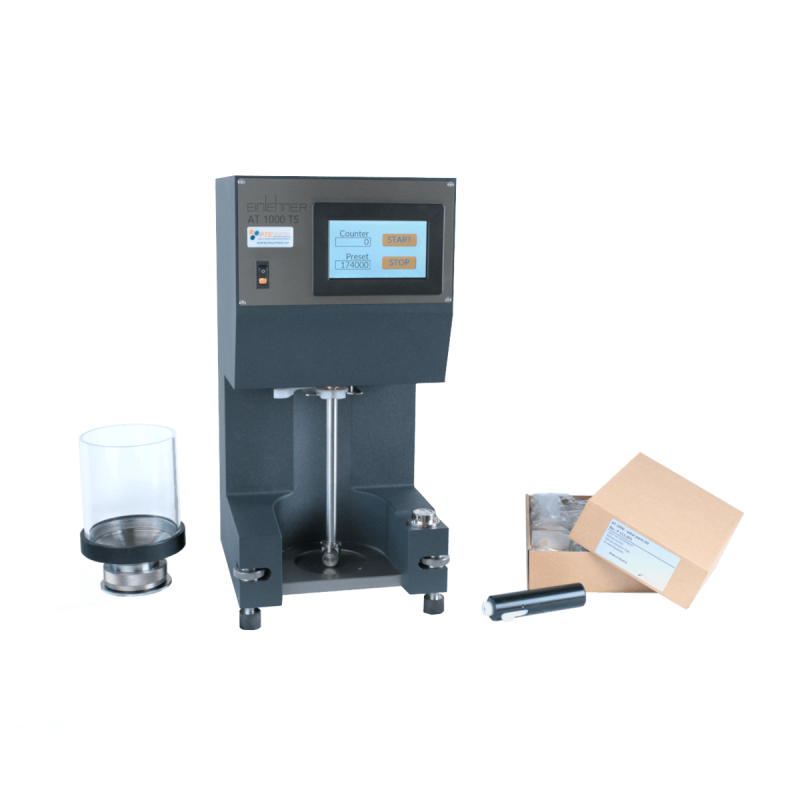
Abrasion Tester AT 1000 TS (Einlehner)
Einlehner abrasion tester for determining the abrasiveness of pulp and stock suspensions.
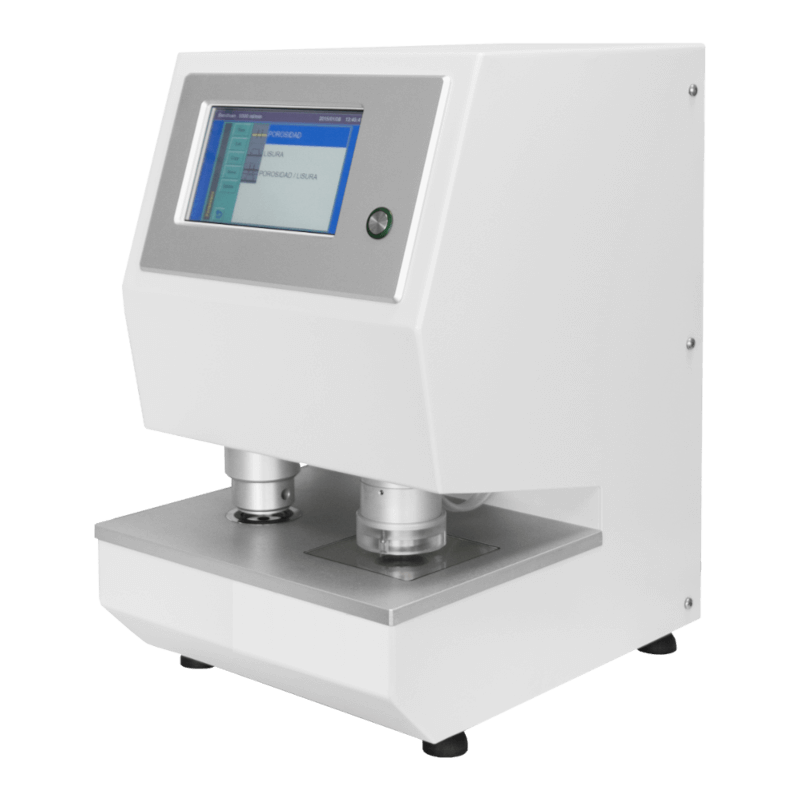
Bendtsen Tester
For determining roughness and air permeability using the Bendtsen method.
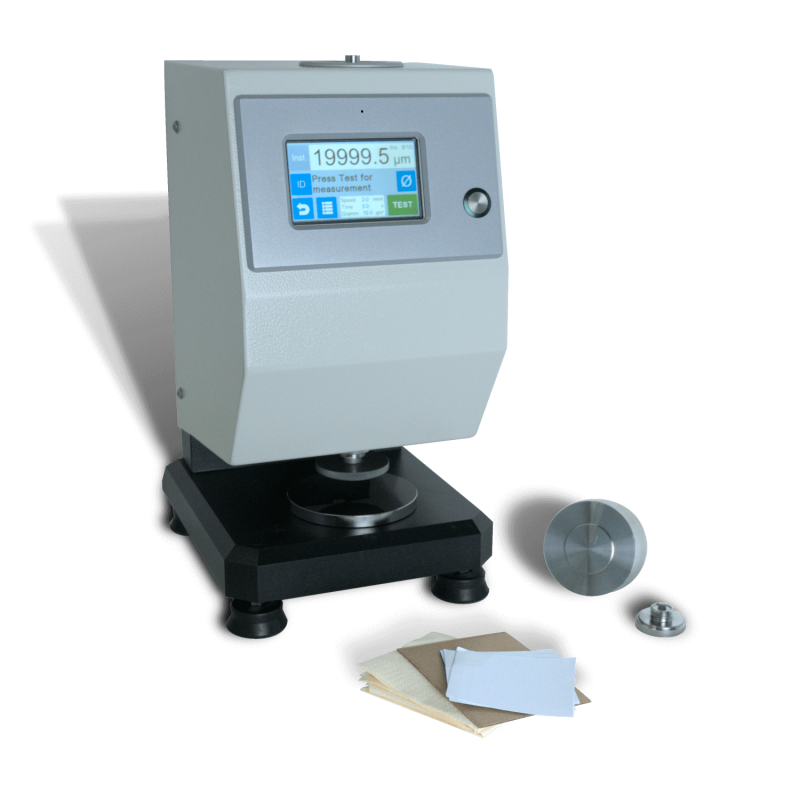
Universal Thickness Gauge
For determining the thickness of paper, tissue, cardboard, leather and other materials.
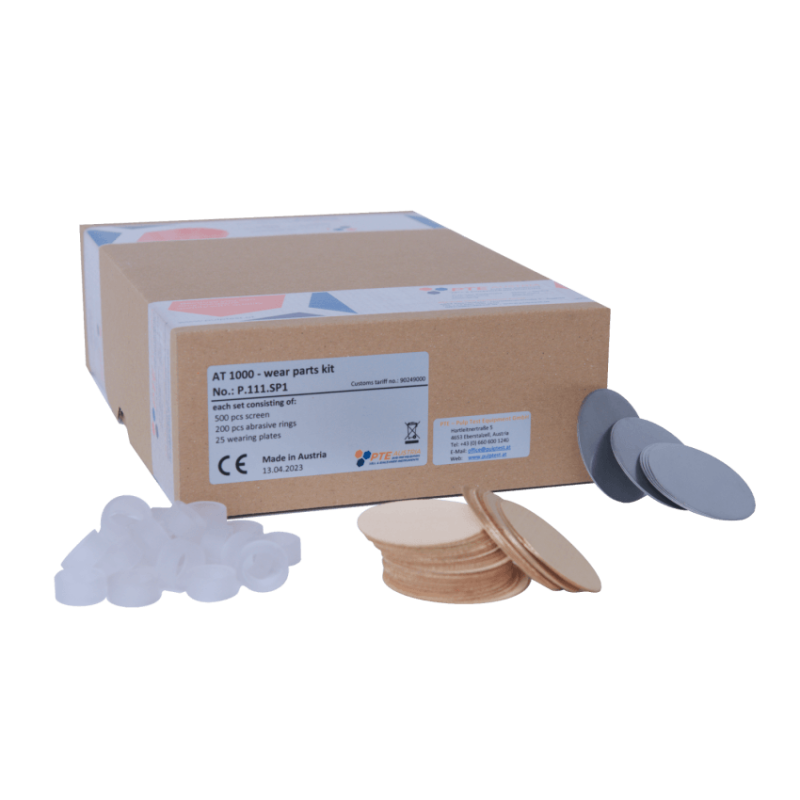
AT 1000 wear parts set
for (original Einlehner) abrasion tester